
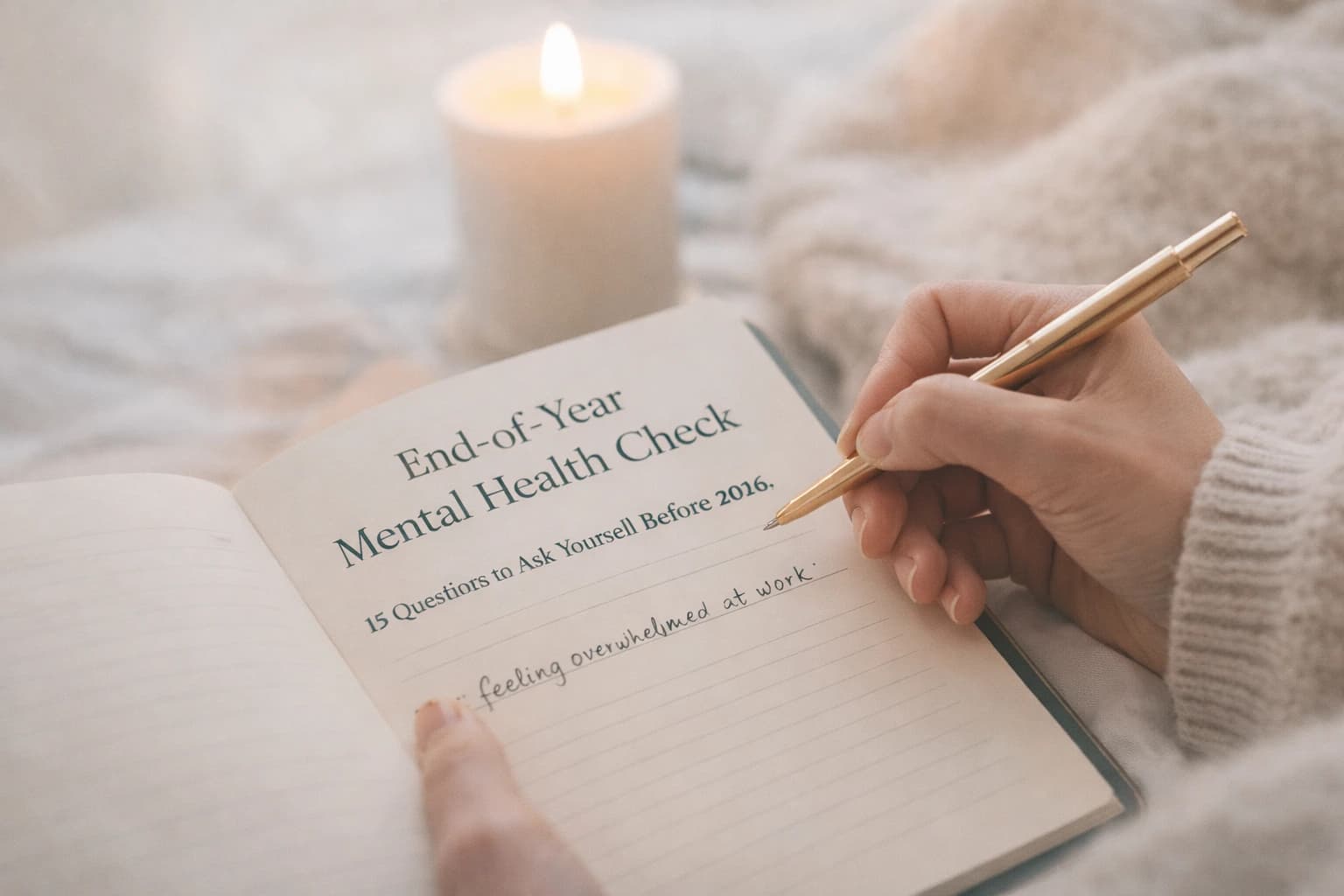
As the year comes to a close, many people rush into goal-setting mode—new planners, new intentions, new pressure. But before you ask “What do I want to achieve next year?” there is a more important question:
How am I actually doing?
Mental health is not measured by productivity alone. It’s measured by emotional capacity, nervous system regulation, and how often you felt safe being yourself.
This end-of-year mental health check is not about judgment. It’s about awareness, compassion, and clarity—so you don’t carry unnecessary weight into 2026.
Take your time. Journal your answers. Pause when something feels tender. That’s information, not failure.
Why an End-of-Year Mental Health Check Matters
From a psychiatric and therapeutic perspective, reflection helps:
Reduce burnout and emotional carryover
Improve emotional regulation
Identify patterns of self-abandonment
Clarify what needs support—not pressure
Create sustainable goals rooted in capacity, not guilt
When we skip reflection, we repeat cycles. When we slow down, we heal.
15 Questions to Ask Yourself Before 2026
Emotional Awareness & Burnout
1. What drained me the most this year—and did I listen to the signs?
Think about emotional exhaustion, resentment, irritability, or numbness. Burnout often whispers before it screams.
2. What healed me, even a little?
This could be therapy, rest, medication, walking, prayer, journaling, or simply being understood.
3. When did I feel emotionally overwhelmed but kept pushing anyway?
High-functioning anxiety often looks like “handling it” while quietly falling apart.
Boundaries & Self-Abandonment
4. Where did I abandon myself to keep the peace?
Notice moments you minimized your needs, stayed silent, or over-gave to avoid conflict.
5. Who benefited most from my lack of boundaries?
This is not about blame—it’s about clarity.
6. What boundary did I avoid setting because I feared being misunderstood, rejected, or labeled “difficult”?
Identity, Growth & Self-Trust
7. In what ways did I grow that had nothing to do with productivity?
Emotional maturity, awareness, restraint, or learning to pause all count as growth.
8. Where did I outgrow a role, relationship, or version of myself?
Outgrowing doesn’t mean failing—it means evolving.
9. Did I trust my intuition this year? When did I ignore it—and what did that cost me?
Mental Health & Coping
10. What coping skills actually helped me—and which ones stopped working?
This matters clinically. Coping strategies need updating as life changes.
11. How did my anxiety, mood, focus, or sleep change across the year?
Patterns here can guide therapy goals or medication adjustments.
12. Did I ask for help when I needed it—or did I try to self-manage everything?
Looking Ahead with Compassion
13. What do I need less of in 2026 to protect my mental health?
Less overcommitment. Less emotional labor. Less self-criticism.
14. What does “support” actually look like for me next year?
More structure? More rest? More accountability? More therapy? More medication consistency?
15. If I treated my mental health like a priority instead of an afterthought, what would change first?
A Gentle Reminder Before You Set Goals
You do not need to become a new person in 2026.
You need to become a more supported, regulated, and self-honoring version of who you already are.
Mental wellness is not about doing more.
It’s about doing what’s sustainable.
When to Consider Professional Support
If this reflection brings up:
Persistent anxiety or low mood
Emotional numbness or irritability
Difficulty focusing, sleeping, or coping
A sense of being “stuck” despite effort
It may be time to explore therapy, medication support, or a structured mental health plan.
At NOVA Wellness Psych, we believe mental health care should feel collaborative, compassionate, and personalized—not rushed or dismissive.
You deserve to enter 2026 regulated—not depleted.
If you’d like support navigating this transition, professional care can help you move forward with clarity instead of pressure.
📍 Telepsychiatry & In-Person Services
🌐 www.novawellnesspsych.com
📧 clients@novawellnesspsych.com
📞 917-806-1520 | 929-496-7214